
Hormuz Risk Opens $40-Plus Price Gap Between Crude Grades
Back in late June, after the United States and Iran agreed to cease hostilities in the Persian Gulf for 60 days, oil prices took a dive. Two months later, Brent is trading at over $107 per barrel, and WTI is moving closer to $103, as a deep chasm opens up between the price for oil stuck in the Gulf and oil that can be moved with no threat of a drone or missile attack.
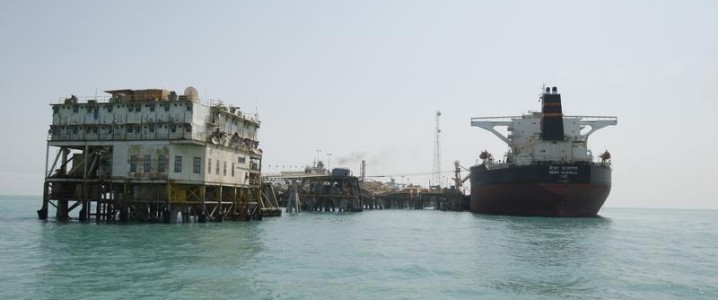
Iraq, OPEC’s number-two producer, has suffered some of the most severe disruptions in its oil industry because of the war between the U.S. and Israel, and Iran. The country had to shut in wells earlier this year, and it has had to offer heavy discounts on its oil to entice buyers to take the risk of moving it out of the Persian Gulf—and that is despite reports that Iran had granted an exemption to Iraqi oil cargoes from the threat of being attacked.
Iraq’s Basrah Medium for loading next month, for instance, is being offered at a discount of $43.06 per barrel to the regional Murban benchmark, Reuters’ Clyde Russell reported today, citing Argus data. Murban crude—ADNOC’s flagship blend—is trading at over $127 per barrel, by the way, highlighting the gap between the price for oil having to pass through Hormuz and the price for oil that does not. As Russell pointed out in his report, Murban is loaded at the port of Fujairah, which sits right outside the chokepoint, while most Iraqi crude loads inside the Persian Gulf.
Ship-tracking data shows that tanker movements via the Strait of Hormuz remain severely subdued, especially after the latest attacks. Windward, for instance, reported just one outbound tanker for September 14, with another two entering the waterway that day. All three vessels were liquefied petroleum gas carriers.
Once the oil gets out of Hormuz, however, things change, price-wise. With the dangerous chokepoint clear, prices jump, Reuters’ Russell also reported on Monday. Once the dangerous part is over, the discount shrinks, as demand for physical oil trumps any concerns about safety and insurance. This, in turn, highlights the resilience of crude demand even with prices significantly higher than at the start of the year. Demand has not yet reached a breaking point, and those discounts may be part of the reason.
Meanwhile, crude produced outside the Persian Gulf is enjoying higher prices as well. The most extreme example appears to be an Australian blend, noted by Russell. The medium sweet Pyrenees was trading at $138.04 per barrel last Friday, compared with $70.59 per barrel on February 27, right before the United States and Israel launched their attacks on Iran, igniting the war that led to the closure of Hormuz. The Pyrenees is, according to Russell, the most expensive crude blend followed by Argus.
Meanwhile, Russian crude is commanding a premium over Brent, despite sanctions. Earlier this month, the ESPO blend, which loads in Russia’s Far East, traded at up to $10 per barrel above Brent crude as Chinese independent refiners rushed to replace Iranian barrels paralyzed by the U.S. naval blockade in the Persian Gulf. Indian refiners have also been buying more ESPO loading from the port of Kozmino, pushing total exports of that blend up 6% in the first half of the year. Demand is likely to remain strong in the second half as well.
While oil exporters in the Gulf struggle to get their oil out of Hormuz, Saudi Arabia is trying to repair its vital East-West pipeline, and the Yemeni Houthis just struck more targets in the kingdom. The war is not only approaching its end but intensifying. The oil price gap between Hormuz-bound oil and all other oil, sanctioned or not, may yet grow deeper.
This post appeared first on https://oilprice.com